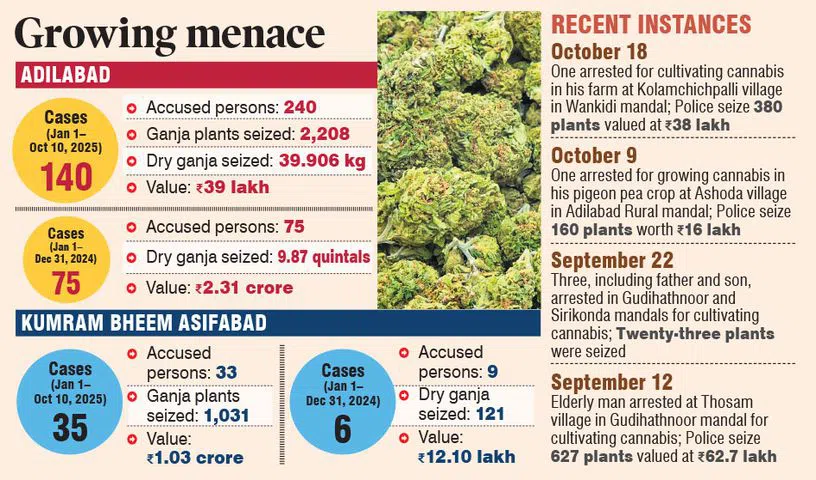
Cannabis cultivation, once a traditional but banned activity, has become a profitable trade in the remote areas of Adilabad, with increasing demand from Telangana and Maharashtra. Authorities are stepping up surveillance to curb illegal growth amid rising incidents of cultivation
Adilabad: Cultivation of cannabis, once a banned yet traditional activity for a few tribal communities in the interior parts of the erstwhile Adilabad district, has now turned into a lucrative trade for several residents of remote areas. The boom is fuelled by growing demand not only from local consumers but also from neighbouring Maharashtra, courtesy the preference for the unique ‘high’ produced by cannabis from this region.
Traditionally, certain aboriginal tribes offered a handful of cannabis leaves as Naivedyam to their deities during Diwali by growing a plant or two openly in their fields. However, the practice has evolved into a clandestine commercial activity, with both tribals and non-tribals secretly cultivating cannabis as an intercrop in cotton fields to meet the surging demand in Telangana and Maharashtra.
“Cultivation of the prohibited ganja crop has been a traditional practice among some tribal communities. It has now become a source of income for both tribals and non-tribals, with many takers from Mancherial, Bellampalli, Kinwat and Chandrapur,” a police officer supervising the anti-ganja enforcement wing said.
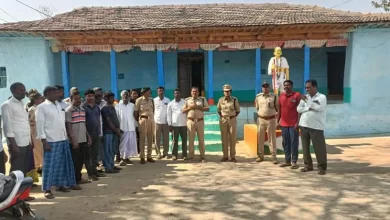
Police attribute the persistence of the practice to a lack of awareness about its legal consequences. Officials said awareness drives were being conducted to sensitise cultivators, while efforts were on to ensure convictions under the Narcotic Drugs and Psychotropic Substances (NDPS) Act, 1985.
To curb the illegal cultivation, special police teams have been formed in Adilabad, Kumram Bheem Asifabad and Nirmal districts, where cannabis is widely grown. These teams are relying on modern surveillance, including drones, to detect hidden plantations in inaccessible terrain.
“Police are also carrying out combing operations in interior areas. A team of 10 personnel covers one mandal each day to identify and destroy the crop. The combined use of drones and ground operations is proving effective in reducing the menace,” another police officer said.