HC sets strict guidelines for social media-related FIRs in Telangana; quashes FIRs against Nalla Balu
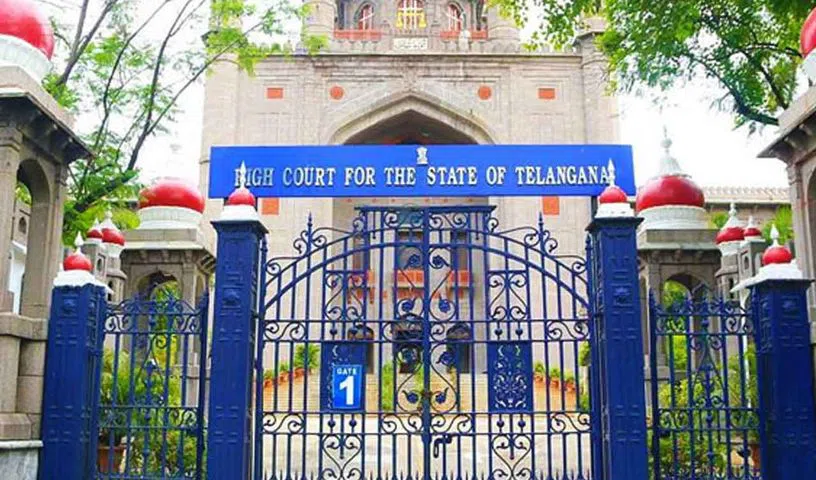
Telangana High Court quashed three FIRs against BRS social media activist Nalla Balu, ruling that political speech, even if harsh or offensive, is constitutionally protected. The Court issued strict guidelines to prevent misuse of FIRs in cases related to social media posts
Hyderabad: Justice N Tukaramji of the Telangana High Court on Wednesday quashed three FIRs filed against Nalla Balu alias Durgam Shashidhar Goud, who was booked by the police in Ramagundam, Karimnagar and GDK-I Town over a series of social media posts critical of Chief Minister A Revanth Reddy and the ruling Congress, including the post – “No Vision, No Mission, Only 20% Commission! This is how the 15-month rule of the Revanth Reddy led Congress Government is in Telangana”.
Emphasising the importance of safeguarding fundamental rights as well as preventing the criminal process from being invoked mechanically or arbitrarily, the court issued detailed operational guidelines for police authorities and judicial magistrates while dealing with proceedings arising out of social media posts. The court directed that before registering an FIR for alleged defamation or similar offences, police must verify whether the complainant qualifies as the “person aggrieved”, noting that complaints by unrelated third parties were not maintainable except in cases of cognizable offences.
Where a representation discloses a cognizable offence, a preliminary inquiry is mandated to ascertain whether the statutory ingredients of the alleged offence are prima facie made out. The court further stressed that a high threshold must apply to speech-related offences such as promoting enmity, sedition, or threats to public order, which cannot be registered unless there is clear material showing incitement to violence, hatred, or public disorder, in line with the principles laid down in Kedar Nath Singh v. State of Bihar and Shreya Singhal v. Union of India.
Strong protection was also extended to political speech, with the court cautioning that harsh, offensive, or critical political expression cannot be criminalised unless it incites violence or poses an imminent threat to public order, reiterating the constitutional guarantee of free speech under Article 19(1)(a).
It was also clarified that defamation, being a non-cognizable offence, cannot form the basis of a direct FIR, and complainants must approach the jurisdictional magistrate, with police action permissible only on a specific judicial order.
Stressing the need for proportionality, the court directed strict adherence to arrest guidelines in Arnesh Kumar v. State of Bihar, prohibiting automatic or mechanical arrests. In cases involving sensitive political expression, prior legal scrutiny by public prosecutor is mandatory before registration of an FIR. Finally, the court instructed that frivolous, vexatious, or politically motivated complaints must be closed under Section 176(1) of the BNSS for lack of sufficient grounds.
The court, while granting relief, observed that political speech even when harsh, vulgar or satirical forms part of constitutionally protected dissent and cannot be criminalised unless it incites violence or poses a threat to public order. It noted that the posts in question, which alleged a “20% commission” under the present Congress government and used unflattering language against Chief Minister A Revanth Reddy, may be offensive in tone but did not cross the line into criminality.
The judge emphasised that defamation under Sections 499 and 500 of IPC was a non-cognizable offence, which can be pursued only by an aggrieved person through a magistrate, not through FIRs lodged by unrelated third parties. Continuing such cases, he said, would amount to harassment and an abuse of process.
The guidelines are as follows:
- Verification of locus standi: Before registering an FIR for alleged defamation or similar offences, the police must verify whether the complainant qualifies as the “person aggrieved” under the law. Complaints by unrelated third parties without standing are not maintainable, except where the report concerns a cognizable offence.
- Preliminary inquiry in cognizable offences: Before registering a crime, police shall conduct a preliminary inquiry to determine whether the statutory ingredients of the alleged offence are, prima facie, made out.
- High threshold for media post or speech-related offences: No case alleging promotion of enmity, intentional insult, public mischief, threat to public order, or sedition shall be registered unless there is prima facie material showing incitement to violence, hatred, or public disorder. This threshold must be applied according to the principles laid down in Kedar Nath Singh v. State of Bihar, 1962 Supp (2) SCR 769, and Shreya Singhal v. Union of India, (2015) 5 SCC 1.
- Protection of political speech or posts: The police shall not mechanically register cases concerning harsh, offensive, or critical political speech. Only when the speech amounts to incitement to violence or poses an imminent threat to public order may criminal law be invoked. Constitutional protections for free political criticism under Article 19(1)(a) must be strictly enforced.
- Defamation as a non-cognizable offence: Since defamation is a non-cognizable offence, police cannot directly register an FIR or crime in such matters. The complainant must approach the jurisdictional Magistrate. Police action may follow only upon a specific order of the Magistrate under Section 174(2) of the BNSS.
- Compliance with arrest guidelines: Police must strictly follow the principles laid down in Arnesh Kumar v. State of Bihar, (2014) 8 SCC 273. Automatic or mechanical arrests are not allowed, and the principle of proportionality in criminal process must be observed.
- Prior legal scrutiny in sensitive cases: In matters involving political speech or other sensitive forms of expression, police shall obtain prior legal opinion from the Public Prosecutor before registering an FIR to ensure the proposed action is legally sustainable.
- Frivolous or motivated complaints: Where a complaint is found to be frivolous, vexatious, or politically motivated, police shall close the matter under Section 176(1) of the BNSS, citing absence of sufficient grounds for investigation.