
Rohit Sharma’s future and differences with VVS Laxman over injured players and India A scheduling emerged as key factors behind Ajit Agarkar’s exit as chairman of selectors, with his absence from a crucial BCCI review meeting further widening the rift
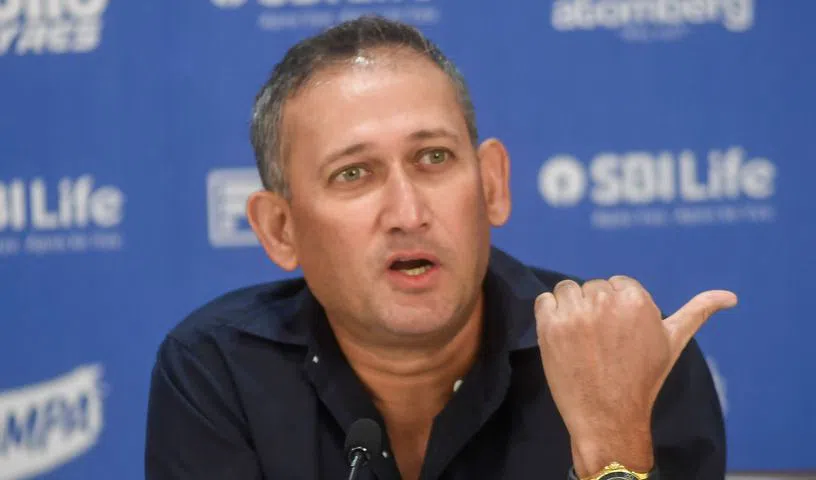
New Delhi: The drama surrounding the future of former India skipper Rohit Sharma and growing differences with Centre of Excellence head VVS Laxman became the main reasons for chairman of selectors Ajit Agarkar and the BCCI to part ways ahead of the 2027 ODI World Cup.
Perhaps the straw that broke the camel’s back was Agarkar’s absence from the all-important review meeting in Mumbai to discuss the England series debacle and the road ahead.
BCCI secretary Devajit Saikia defended him, but at one level, many in the board felt that Agarkar should have attended such an important meeting.
While Agarkar was not averse to continuing until the end of the ODI World Cup in South Africa, the BCCI over the last month dropped enough hints that it would be looking at a fresh face.
Normally, the BCCI would not like to let go of someone whose selection panel picked squads that reached four ICC white-ball tournament finals in the last three years, winning three trophies — two T20 World Cup titles and one Champions Trophy.
But the relationship between Agarkar and the current BCCI regime turned frosty, mainly due to a couple of reasons.
Rohit’s future and BCCI statement
It was just before the white-ball series against England that the selection committee, headed by now-former chairman Ajit Agarkar, in consultation with the Indian team management and key decision-makers in the BCCI, decided to move on from veteran opener Rohit Sharma after the Lord’s ODI.
Accordingly, a collective decision was taken and South Zone selector Pragyan Ojha, who happens to be one of Rohit’s closest friends, was asked to “communicate” the decision to the two-time ICC trophy-winning former skipper.
Rohit, who wants to play in the 2027 ODI World Cup, was not exactly happy when the message was conveyed. He spoke to a very powerful administrator and expressed his misgivings about how he was being treated by the chairman of selectors.
Those who know Agarkar said that when the BCCI officially “issued” a statement backing Rohit and dismissing talks of his retirement after Lord’s, he was left slighted and angry.
“That was perhaps the day when Ajit knew that it would be very difficult for him to continue. In fact, he had no inkling that a media statement was issued by the BCCI. He understood that going forward, the call on big names won’t be his prerogative,” a senior BCCI official privy to the development told PTI on condition of anonymity.
Those who know Agarkar closely would vouch that when it comes to cricketing decisions, just like head coach Gautam Gambhir, he operates from a place of honesty, even though some decisions work and some do not.
The BCCI wanted him to go slow on Rohit’s future, while he felt that if Yashasvi Jaiswal had to play in the ODI World Cup, he had to be given around 20 ODIs to settle down.
The argument in favour of Rohit was that he was scoring in every third ODI, which could not be considered bad. Agarkar, however, perhaps felt that there were no guarantees that the ageing ‘Hit-Man’ would be effective in the Rainbow Nation.
The fact that Agarkar possibly could never accept was that when it comes to megastars in Indian cricket, retirement or continuation has hardly ever been a call taken by the selection committee. It has and will always remain an administrative call — give it or take it.
VVS Laxman and Centre of Excellence
VVS Laxman and Agarkar had been India teammates for quite a number of years, but there were serious differences of opinion between them when it came to policy decisions on injured players as well as the scheduling of India A games.
“If you think that VVS Laxman’s urge to win at all costs is anything less than, say, a Virat Kohli or a Sourav Ganguly, then you are mistaken. Whatever the competition, Laxman always wanted the best eleven to play,” a former state team coach who has seen Laxman operate from close quarters at the COE said.
Agarkar, who had also selected the Indian men’s squad for the Hangzhou Asian Games, found it difficult to fathom why India needed to play its first-choice team at the Asian Games, where cricket is basically a tier-2 event.
In Hangzhou, Ruturaj Gaikwad had led the side as the first team was busy with the ODI World Cup. This time, Shubman Gill is going into an ODI series without Shreyas Iyer, Jasprit Bumrah, Axar Patel, Ishan Kishan and Washington Sundar, with at least four of them being first-choice players.
The clash of two India A Tests in Puducherry from September 22 to October 2 with the Irani Cup in Srinagar from October 1 to 5, and the overlap of India A’s three ‘Tests’ against New Zealand A from October 24 to November 10 with the T20Is and ODI series, also became a point of difference between the duo.
It must be noted that India A scheduling is handled by the head of the COE — at one point, Rahul Dravid handled it — along with members of the cricket operations team.
No specific timelines were provided for centrally contracted injured players, and that also became a topic of debate. Interestingly, Laxman was also miffed that the COE got a lot of flak for reasons that were not exactly under his control. Mutual mistrust had also grown after an elaborate injury list of the top players was published in the media.
By the time Agarkar decided to skip the review meeting, things had already gone out of hand and his exit became a mere formality.